


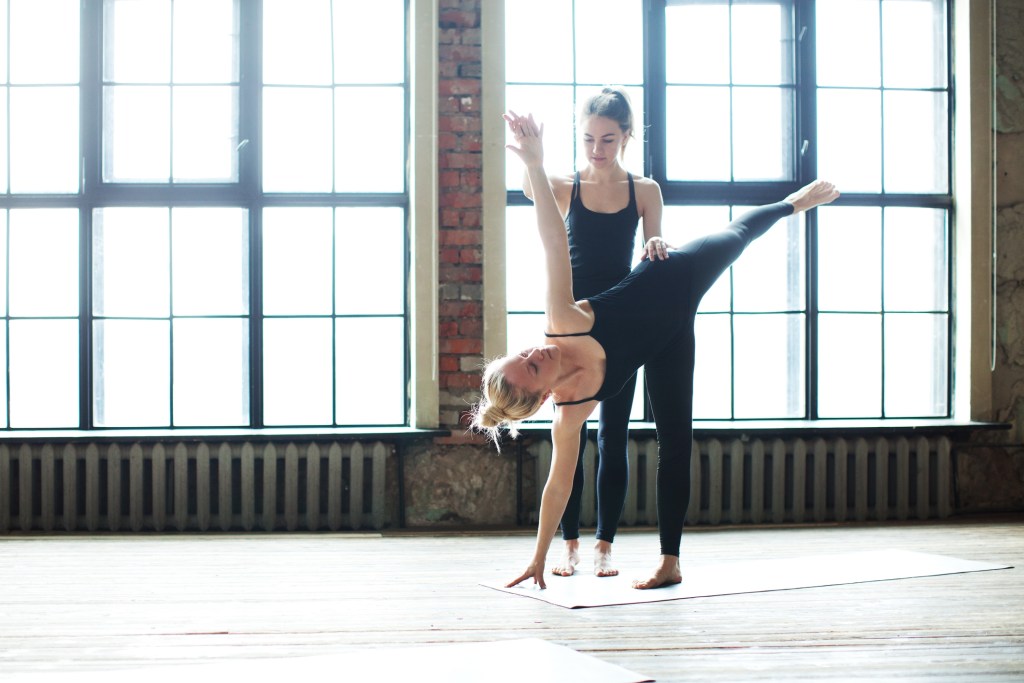
We can learn a lot from the phases of the moon. While the moon cycle is a natural time-keeper, we can notice the environmental impacts—and feel the energetic impacts—the moon has on earth as it reaches fullness. Full moons get the most attention, astrologically, but there’s a lot we can learn from half moons, which appear approximately twice a month and can teach us all about balance. Similarly, ardha chandrasana (In Sanskrit, ardha means “half”, chandra means “moon”, and asana means “pose.”) can help us find balance on and off the mat. In this step-by-step guide, we’ll explain what ardha chandrasana is plus why you might want to add half moon pose to your yoga practice.
What is Ardha Chandrasana?
Practiced in most yoga classes, half moon pose is a single-legged standing yoga pose that will challenge your leg muscles and your ability to balance. There are a variety of modifications available for this pose, making it a suitable balancing posture for yoga students of all levels, including beginners. For instance, it can also be a fun pose to transition into from extended triangle pose (utthita trikonasana) or extended side angle pose (utthita parsvakonasana). Both yoga poses are similar in their full-body extension, and half moon pose offers a way to challenge yourself with a balancing variation.
Benefits of Ardha Chandrasana
Most notably, ardha chandrasana challenges your sense of balance and full-body alignment. It increases your body awareness and proprioception—the sense of your body’s position in space—which can bring more poise to your everyday activities. It can also help prevent the risk of injury by making you more aware of your body’s position and movements. Half moon pose also strengthens the thighs, ankles, abdomen, and buttocks. It opens the chest, shoulders, and torso, while lengthening the spine. This yoga pose also effectively stretches the groin, hamstrings, and calves. The stimulation of torso organs can provide digestive relief. When practiced correctly, this yoga pose has therapeutic benefits for sciatica and lower back pain.

How to Do Half Moon Pose
- Begin by standing at the top of your mat in mountain pose (tadasana). Turn to the left and step your left foot back wide. Extend your arms out to the sides at shoulder-height. Your feet should be as far apart as your wrists. Rotate your right (front) foot 90 degrees, so your front foot’s toes point to the top of the mat. Turn your left foot’s toes slightly in. Align your front heel with the arch of your back foot.
- Reach through your right hand in the same direction that your right foot is pointed. Shift your left hip back, then fold sideways at the hip. Rest your right hand on your outer right shin, ankle, or a yoga block. If you are more flexible, place your fingertips on the floor.
- Align your shoulders so your left shoulder is directly above your right shoulder with your left hand reaching up. Gently turn your head to gaze at your left thumb. This is extended triangle pose (utthita trikonasana).
- Bring your left hand to rest on your left hip. Turn your head to look at the floor. Then, bend your right knee and step your left foot a few inches closer to your right foot. Place your right hand’s fingertips on the floor or a yoga block a few inches in front of your right foot.
- Press firmly into your right hand and foot. Straighten your right leg while simultaneously lifting your left leg. Work toward brining your left leg parallel to the floor or even higher than your hips.
- Reach actively through your left heel. Do not lock your right leg’s knee. Keep your right foot’s toes and kneecap facing in the direction of your head.
- Stack your top hip directly over your bottom hip, and open your torso to the left. Then, extend your left arm, and point your fingertips directly toward the sky. If you can balance comfortably there, turn your head and gaze at your left thumb.
- Draw your shoulder blades firmly into your back. Lengthen your tailbone toward your left heel.
- Hold for up to one minute. To release, lower your left leg as you exhale. Return to extended triangle pose. Inhale, and press firmly through your left heel as you lift your torso. Lower your arms. Turn to the left, reversing the position of your feet, and repeat for the same length of time on the opposite side.
Variations of Half Moon Pose
While practicing this yoga pose will strengthen and stretch your entire body, it can sometimes be difficult to find balance and correct alignment. Try these simple modifications to find a variation of the posture that works for you:
- If you can’t touch the floor with your bottom hand or fingertips, rest your hand on a yoga block. Begin with the block on its highest side, and gradually lower it to the middle and lowest height settings until you find what best supports your balance.
- You can also practice this pose with your back against a wall, or so that your back foot can press into the wall behind you. This will provide support and ease any fear of falling:
- Stand a leg’s length away from the wall, keeping your back to the wall.
- Lower your torso into a forward bend with your fingertips on the floor in front of you, then raise your left leg parallel to the floor.
- Press the sole of your left foot against the wall with your toes pointing down.
- Gradually rotate your torso and left leg to the left, coming into ardha chandrasana with your left foot supported against the wall.
- For more of a challenge, lift your bottom hand away from the floor, and rest it on the thigh of your standing leg.
Contraindications of Ardha Chandrasana
Do not practice half moon pose if you have low blood pressure or are currently experiencing headaches, insomnia, or diarrhea. If you have a neck injury, do not turn your heads to face the top hand (in Step 7); continue looking straight ahead. Always work within your own range of limits and abilities. If you have any medical concerns, talk with your doctor before practicing yoga and let your yoga teacher know.
Additional Tips
To reap the benefits of half moon pose, it’s important to practice it with correct alignment. Keep the following information in mind when practicing this pose:
- Build the pose from the ground up; work on getting the foot and leg placements first.
- Do not allow your torso to drop forward in the pose. This often happens if you’re straining to reach your front fingertips to the floor or to raise your leg too high. Instead, try to keep your hips, chest, shoulders, legs, and head aligned. Imagine that you’re practicing the pose between two waterfalls; if you drop your torso forward or lean too far back, you will get wet. Try to keep your body “dry.”
- Keep your standing leg’s knee soft, or with a subtle bend. Do not lock or hyperextend it.
- Firm and activate the muscles of both thighs. Try to maintain an equal balance of energy and effort in both legs.
Half moon pose can challenge your practice in new ways and help you find balance in many areas of your life. Remember to breathe easy throughout the pose. As you continually draw your awareness back to your breath, you can stay calm and aware of the present moment. Don’t be afraid to fall; if you do, simply get up and try the pose again. Relax your breath, focus your mind, and take it slowly. With practice and patience, you’ll be balancing gracefully in space—just like the (half) moon!
How do you like to practice half moon pose? Let us know in the comments below!
By Practyce Team
June 22, 2022